K-drama release schedule for 2026
J-drama release schedule for 2026
Thai-drama release schedule for 2026
Kim Jong Un – Patron of Music and Dramas


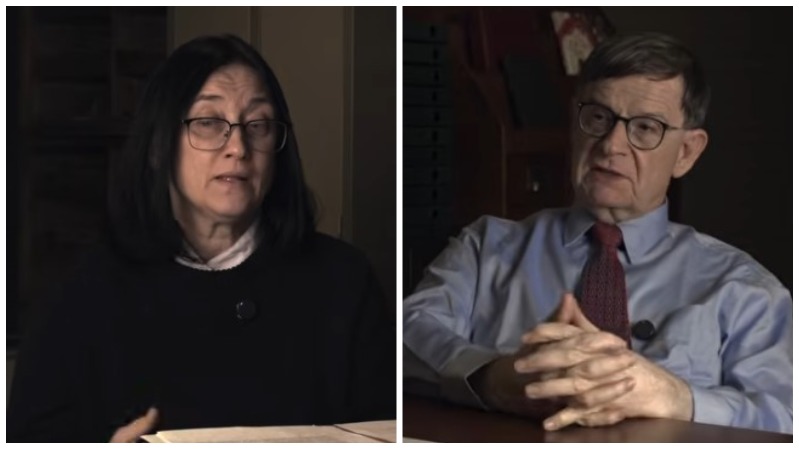
Andrey Lankov’s YouTube channel has released a new video about television in North Korea.
This time, instead of delivering his own lecture, Lankov invited Tatiana Gabrusenko, a professor at Korea University and a specialist on North Korean television.
The first part of the discussion focused on the fundamental differences between North Korean broadcasting and that of South Korea – and, arguably, the rest of the world.
North Korean TV does not shout or rush
According to Gabrusenko, the most striking difference lies in the tone. Contrary to popular belief, North Korean television does not shout. It soothes.
If you measure the level of nervousness and agitation, North Korean TV compared to its southern counterpart is the epitome of Zen calm.
"North Korean television is built on a different principle; a different philosophy lies behind it. The goal is not to attract people, make them buy something or direct their attention somewhere. The main idea is that the mood should be steady and positive. Television should not agitate the viewer. People should feel they live in a calm, stable world. Problems may arise, but everything is under control, everything can be solved, everything is peaceful. Creating a very calm, measured and confident atmosphere is extremely important – every aspect of television is geared toward this. The anchors’ personality, appearance, voices, speech patterns, the length of reports – everything serves to create a stable, calm, balanced picture.
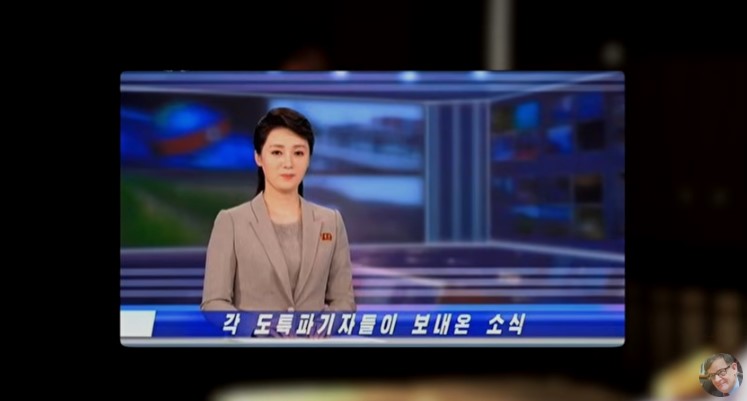
"If we look at the anchors, their appearance is very different from that of South Korean anchors. In South Korea, they are slim, very thin women with triangular faces, huge eyes and straight noses. North Korean anchors look different. They are closer to traditional Korean ideals of beauty – very even features, smooth oval faces. That is very important. This applies to both men and women – calm, even faces.
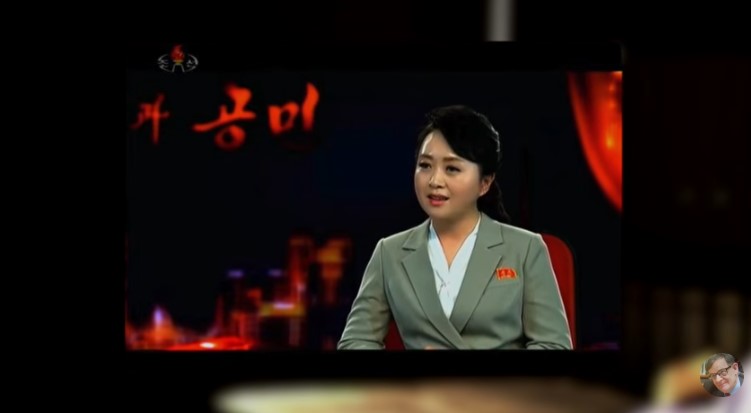
"The anchor does not have to be young. They can be middle-aged. Not necessarily a great beauty, but she exudes a calm, maternal steadiness in everything.
"Measured, even smiles, the pace of speech never accelerates. There is no rushed, tangled delivery where a person seems to be driving themselves into a frenzy."
This observation is particularly interesting because the mention of North Korean TV usually brings to mind a strange, shouting female announcer declaring that Seoul will be destroyed by a fiery blast or something similar.
But it turns out that this is just one particular announcer – the one "wearing the pink blouse" – and her name is Ri Chun-hee. She appears to be a special exception.
Ri Chun-hee – the anchor wearing the pink blouse
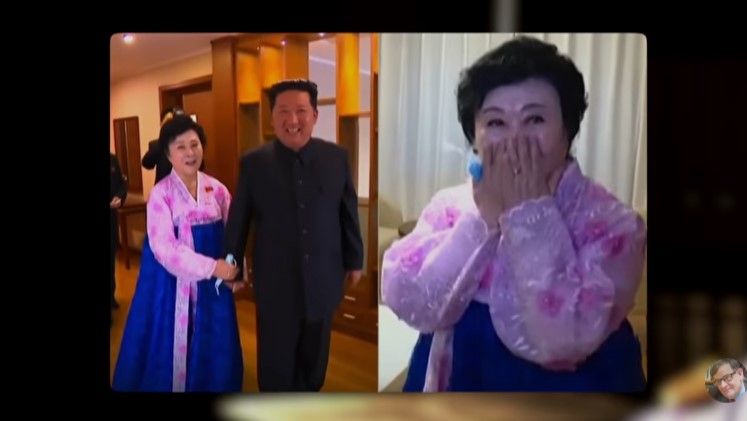
Here is what Gabrusenko said about Ri Chun-hee:
"She is already an elderly woman, a very old anchor of North Korean television. She is probably like Soviet anchor Kirillov in his day, only a female version. Ri Chun-hee has been on television since time immemorial. A few years ago, she celebrated her seventieth birthday. For that birthday, Kim Jong Un personally gave her an apartment – he literally walked her into it. It is a luxurious duplex in a prestigious district. Everyone expected that to be the final chord of her career. But no – she still works as before.
"Her manner is funny because she speaks excitedly, like a grandmother who is absolutely delighted with her wonderful grandson. He launched a good rocket, he launched a corvette (a destroyer – editor’s note) into the water. And this grandmother literally bounces with tender delight: 'Oh, look at our boy! Oh, well done!' That is her style – a doting grandmother’s intonation."
The image of the leader
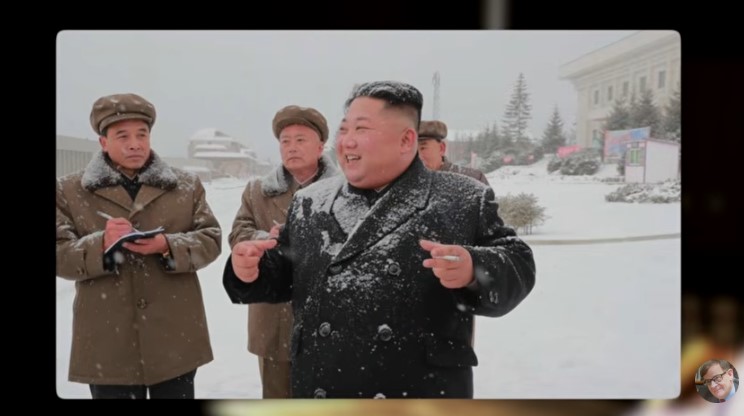
The second unexpected point that Gabrusenko noted about North Korean television is the portrayal of the leader. One might expect the leader to appear everywhere, to be praised and glorified constantly. But in fact, this is not the case on mainstream television. There is a special segment of political programmes and news broadcasts. They show that the leadership is on the job, always inspecting something somewhere.
One can trace a "track." Previously, the leader inspected more civilian facilities – factories making children’s goods, schoolbags and notebooks, tourist complexes – the military was rarely shown. Now, Kim Jong Un is always at a firing range or a military plant.
"If you want to use news programmes to guess what is happening in North Korea, you need to watch where the leader is moving," Gabrusenko noted. "At least, that is what they want to show. That is important."
There is also a canon for how the leader appears on camera.
"Kim Jong Un does not improvise in front of cameras. We never see spontaneous speech or spontaneous movements. He is rarely shown moving at all. It is presented as separate static shots – almost motionless footage. Why? Because they want to avoid any mistakes that are inevitable in such situations. A person might trip, look silly, and so on."
Entertainment on North Korean TV
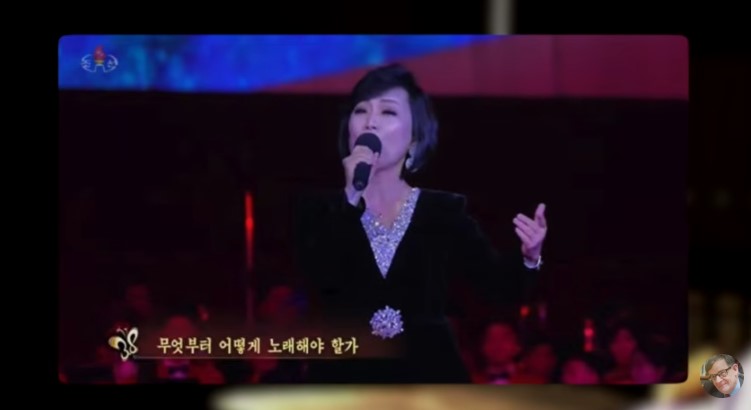
Gabrusenko explained that all three Kims pursued different entertainment policies, most likely based on their personal artistic tastes.
Under the current Kim Jong Un, music and concerts are in favour. The leader is a great concert enthusiast. "Concerts rule." Gabrusenko noted that Kim Jong Un’s wife has a musical education and even sang. Moreover, those recordings have never been withdrawn.
"So on a personal level, he has very close ties with music circles. He apparently believed that this was the best way – that propaganda material reaches people fastest through music. The development of the song genre has reached unprecedented heights. There are good songs that are quickly remembered and stick in your head."
The lyrics, however, are mostly civil lyricism. Unlike the era of Kim Jong Il and the 1990s, love lyrics are rare among new songs. There used to be many, but the theme is clearly in decline.
Andrey Lankov added his own recollection:
"This happened more or less before my eyes. At that time – the 1980s – I interacted quite actively with North Koreans. People perceived the easing of restrictions on everything related to love themes as Kim Jong Il’s personal initiative. Kim Jong Il clearly had a passion for love lyrics and love stories in cinema. He always supervised cinema, even when he was no longer formally in charge, he still paid great attention to it – it was important to him."
Film and TV series
Although Kim Jong Il was the main driving force and curator of North Korean cinema, under the "musical" Kim Jong Un, series production is growing. More attention is paid not to romantic comedies but to spy or military action.
Gabrusenko says:
"Spy dramas without love: action is there, romance is almost absent. Under Kim Jong Un, they started making very interesting spy series with action, like the excellent 'Bulletproof Wall' (Pantanbyok, Bangtanbyeok, 방탄벽). I really like it. There is a wonderful actress, a beauty. And over 15 episodes, there is no romantic storyline at all. She fights Japanese spies who remained in the country after the revolution and protects her little brother. It is a very interesting series in its own right."
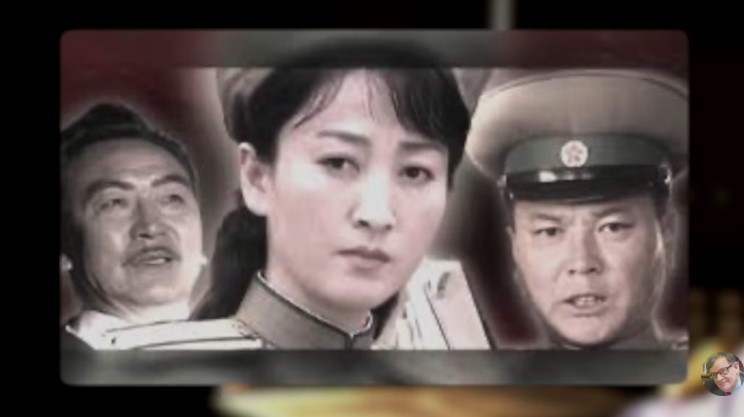
Lankov, as a historian, immediately added that the Japanese spies are pure fabrication – Japan had no proper intelligence structures after the war. But who cares about that for an action-packed series? The main thing is the plot.
As new trends in North Korea’s series industry, Gabrusenko noted the appearance of action, more blood, battle scenes, and naturalism. Meanwhile, romantic subplots are weakly developed.
Kim Jong Un produces series. While the film lover Kim Jong Il made movies. Perhaps it is a global trend – series are flourishing all over the world.
In North Korea, the foundation for series was still laid by Kim Jong Il. The first series like "Nation and Destiny" appeared in the 1990s under his rule. "Nation and Destiny" has 62 parts; they are not connected by a continuous plot, but there is an overarching narrative.
"The basis for a series is usually a popular novel, which is adapted into a multi‑episode series. It turned out to be very effective for all the political messages you want to convey," Gabrusenko notes. "A film cannot contain all that because it is too short."
The number of episodes in North Korean series ranges from 2–3 to 20–25, as in the series "New Spring". There are usually no seasons.
Series have seriously displaced films – almost exclusively series are being shot now. They cover everything, including children’s content. In 2024, the animated series "Prince Hudong and Princess Lallan" (12 episodes) was released, and a new sequel is now coming out.
Old series are also shown on TV, but they always appear in connection with current events.
"Just recently, the corvette 'Choe Hyon' (a destroyer – editor’s note) was launched. And right after that, they showed an old film about the person after whom the corvette was named."
(The destroyer "Choe Hyon" was named after one of the key comrades of the DPRK founder Kim Il Sung – General Choe Hyon (1907–1982). The name was meant to embody two main ideals: heroic struggle for independence and absolute, unshakable loyalty to the leader.)
North Korean “cancellation”
Are old films and series heavily revised following political changes or scandals in the country?
We know that in the USSR, Stalin was cut out of everything after the cult of personality was exposed, and even words were changed.
"North Korea has that too," Gabrusenko said. "For example, there was the writer Han Sorya. For political reasons, they decided to remove him – the leader was unhappy with him, perhaps he was even imprisoned. In short, he disappeared. But what to do with the wonderful play 'Jackals'? Without it, no anti‑American propaganda works at all. Because the word 'jackal' in North Korean Korean means 'American'. And this usage was invented by the writer Han Sorya, who ended up – so to speak – outside the pale. At first they tried to simply remove his works, but then they realised it was a waste of state resources. It is good work – why throw it away?"
Gabrusenko gives an example involving Jang Song‑taek. He was the husband of Kim Jong Un’s aunt, an influential figure in the last years of Kim Jong Il’s rule and at the very beginning of Kim Jong Un’s. Later, he was arrested during a government meeting in front of cameras. After a trial, he was executed. Meanwhile, the aunt was left untouched and still attends important events.
"Jang Song‑taek had a mistress – a leading actress, the main heroine of almost all 1990s films, Kim Hye‑gyong. She even had a child by Jang Song‑taek. For immoral behaviour and involvement with a 'criminal', she too should have been punished. But they could not throw away almost all the films of the 1990s. So they simply removed the actress’s name from the credits. The credits roll, all characters are listed, even the most minor ones, but the main heroine’s name is missing."
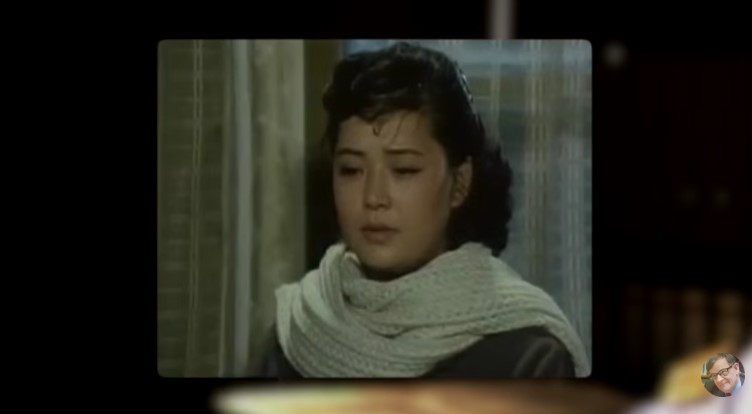
The actress herself disappeared from public life; according to some rumours, she was shot, according to others – sent to a camp.
A second scandal involves Jang Song‑taek’s daughter, a cousin of Kim Jong Un himself. She committed suicide in Paris in 2006.
"She had a love affair with the actor Choe Un‑chol. He was considered a macho in North Korea," Gabrusenko says. "He acted in many films, including the lead role in the 1999–2000 series 'The Secretary of Taehongdan'. Taehongdan is a county; the series is about the 'Arduous March' and the development of that region. A very interesting series, typical of its time. But what to do now with that villain who plays in it?
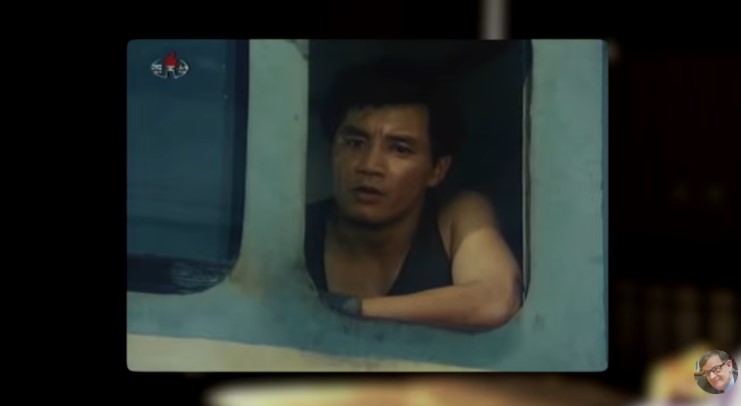
"They replaced him digitally. And it turned out that his role is now played by a young actor from the current generation – that is, 20 years later – acting out a romantic scene with a different actress who, in real life, is old enough to be his mother."
These were not reshoots but a digital face replacement, which demonstrates a high level of digital technology development in North Korea, Lankov added.
Watch the full conversation on Andrey Lankov’s channel at the link above.
* Если в данной статье упоминается Facebook или Instagram, мы информируем вас, что данные соцсети запрещены в РФ, а компания META Platforms Inc. признана экстремистской.
Прислать свою новость или сообщение о предстоящем мероприятии/событии вы можете здесь.


Читать также


Сон Джун Ки рассказал о своем новом фильме «Богота»
Сон Джун Ки, который учил итальянский для съемок в сериале «Винченцо», пришлось учить испанский для съемок в «Боготе...
4 корейские дорамы 2024 года о браке по договоренности
FanAsia собрала подборку из корейских сериалов 2024 года про фиктивные браки и браки по договоренности.

Сериал «Секретный ингредиент» – межкультурная история любви на кулинарную тематику...
Это уникальное сотрудничество между несколькими странами.
 ФанАзия